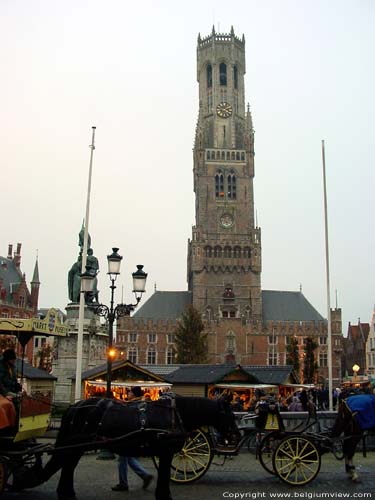
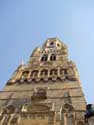
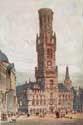
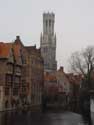
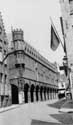
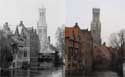
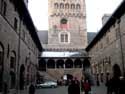
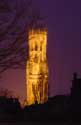
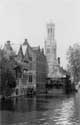
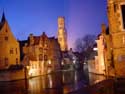
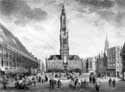
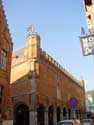
The lot, thegothic, 83 meter high bell tower and the
halls makes together 'the splendourbuilding of Bruges'. This was allready
so in passed centuries when Bruges used to be a great commerce town. At that time the
Halls were used as stockageroom for shiploadings. The Bell tower was a sign of power and
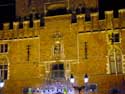
richness of the town. The illuminated tower is to be seen from
faraway at night.
Around 1241 the fassade of the original wooden building was replaced by a stone fassade.
At the beginning there were probably wooden turrets that probably burnt in
1280 and were not renovated afterwards.This fire was the reason why the ships had to find
another new gatheringplace what caused the building of the town Hall.
It is practically not to see, but the tower leaning over. As the lower floor was sagging
(perhaps caused by the filling up of the Reie south of the building)the above floor was
built leaning over the other side to compensate this. The first floor of the tower ended
up with a galery behind a corbeling out
breastwork, with underneath a pointed arched corbel course.
The indenting floor above was during more than a century the topfloor . It contained
bells behind belfry windows,built in high pointed
arches. This part is crowned with a guerite tower,supporting
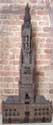
apinnacle . The stone, octogonal upperbuilding from 1482-1486
was built leaning in the other direction, what makes the tower looking as azig zag.
Measurements pointed out that the tower was unbalanced for 83 cm southly. Little
flying buttresses support the upperpart. For a long time there was a wooden
spire on top of the tower, but when it burnt for the second time in 1741 it
was not reconstructed. The open worked breastwork was added between the
pinacles in 1822. The tower has also worked out breastwork with pinnacles at the corners.
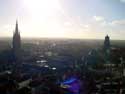
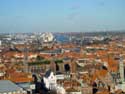
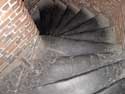
When you have the courage to climb up the 366 steps to get to the top of the tower you are
welcome to see a wonderful view. When the weather is clear you can even see the sea.
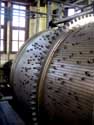
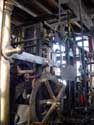
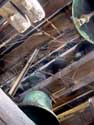
The ancient medieval treasury is located in the second floor and above all is the
carillon of Bruges with his 47 bells that weight 27 tons alltogether.
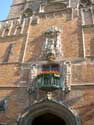
Above the porche with four centered arch and the
'balcony of the commendments of the Halls' you can see a statue of
Mary , by Lanceloot Blondeel in a
Renaissance niche . In 1619 important renovations took place. The
fassade tiself has a lancet with tracery. The rectangular
windows above date from 1561-1564. The creneled fassade is
accentuated with the guerite towers at the angles.
A galery was added behind in 1561-1564.toegevoegd. In the same
period galeries were added on the first floor in the rectangular inner
court.
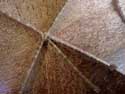
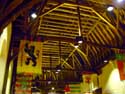
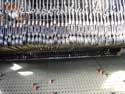
The open truss in the interior of the halls is remarquable.
For more information on the history of the city, look at site
www.bruheim.net/brugge.
Nederlands
Français
  
|